Module 5: The City of Ember
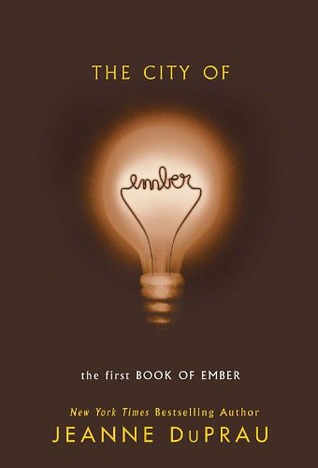
Book Summary:
Ember was built was built to be the perfect, self-sustaining
city, and though it was stranded in the middle of eternal darkness, it was
always kept lit by the large floodlights throughout the city and a generator
beneath the city that provided the power to keep everything functioning.
However, the blackouts are happening more often and for longer periods of time.
Supplies are running perilously low and crops are failing. With no way to carry
light and no place to go, the community of Ember seems doomed to oblivion.
However when Lina finds pieces of a mysterious old message in her closet, she
wonders if the words may be the key to escaping Ember and finding their way to
another world. With the help of Doon who explores the pipe-works beneath the
city, they decode the message and find a way to escape to a fabled place of
safety and light.
APA Reference of Book:
DuPrau, J. (2003). The
city of ember. New York, NY: Random House Children’s Books.
Impressions:
With so many dystopias filling the young adult genre, it was
nice to find one that broke away from many of the stereotypes. First of all, it
started out in decay. It had once been the perfect society that many dystopias
seem to have on the surface, but when the novel starts, the city of Ember that
had always had plenty starts running out of the vital supplies that had once
filled the storerooms to the brim. In many novels the society starts out as
perfection and decays as the novel progresses, but this novel started with a
society that was already scared and functioning on very little. Secondly, the
novel was written with a younger reading audience in mind. The idea of the
dystopia and a perfect yet not at all perfect society came across clearly but
more simply and with less complex or mature themes than are usually found in
high school level dystopian books. In the midst of this decaying society, we
had not one protagonist but two! While many books have a main character and
some secondary supporting characters, this novel had two active main characters
driving the action.
As Ember was a city built to be completely self-sustaining
underground and has been around for generations, it is interesting to see how
things would have changed for this society. There is no understanding of the
concept of a sky or a sun or what might lie beyond the darkness that permeates
their community. When the generator fails, there is nothing but darkness. The
author does an excellent job setting up this hypothetical community in a future
where at one point it became unsafe to live on the world of the surface. This
idea of moving the human population to a safe place due to environmental
hazards seems to be its own sub-genre within the dystopian genre. For example,
books such as Under the Never Sky by
Veronica Roth and The Maze Runner by
James Dashner also consider this possibility.
Professional Review:
This
promising debut is set in a dying underground city. Ember, which was founded
and stocked with supplies centuries ago by “The Builders,” is now desperately
short of food, clothes, and electricity to keep the town illuminated. Lina and
Doon find long-hidden, undecipherable instructions that send them on a perilous
mission to find what they believe must exist: an exit door from their
disintegrating town. In the process, they uncover secret governmental
corruption and a route to the world above. Well-paced, this contains a
satisfying mystery, a breathtaking escape over rooftops in darkness, a
harrowing journey into the unknown and cryptic messages for readers to
decipher. The setting is well-realized with the constraints of life in the city
intriguingly detailed. The likable protagonists are not only courageous but
also believably flawed by human pride, their weaknesses often complementing
each other in interesting ways. The cliffhanger ending will leave readers
clamoring for the next installment. (Fiction. 9-13)
The
city of Ember. (2010). [Review of the book The
city of Ember, by J. DuPrau]. Kirkus
Reviews. Retrieved from: http://www.kirkusreviews.com
Library Uses:
Have middle school students in a book club discuss other,
possibly better solutions for the survival of humanity during an environmental
crisis.
Add to a list of dystopian novels suitable for the younger
side of young adults.

No comments:
Post a Comment